

Subtle Structure, Big Impact: How Wall Angles Transform Interior Spaces
Drop ceiling wall angles might seem like one of those behind-the-scenes components that rarely get a second thought—but they play a critical role in both function and appearance. Installed along the perimeter of a room, this drop ceiling wall angle provides essential support for suspended ceiling tiles while also giving the ceiling a clean, finished edge. Without them, a drop ceiling simply wouldn’t hold together as intended. But beyond structural necessity, wall angles influence the look and feel of a space in surprisingly powerful ways.
At their core, drop ceiling wall angles serve as a reliable framework to anchor the edges of a suspended ceiling grid system. When ceiling tiles are laid out across a room, it’s the wall angles that keep everything aligned and secure at the edges. They create a flush transition between the suspended grid and the existing walls, ensuring the ceiling’s integrity and preventing sagging over time. While it’s easy to focus on the larger components like T-bars and tiles, the wall angle is what defines the boundaries and helps keep everything square.
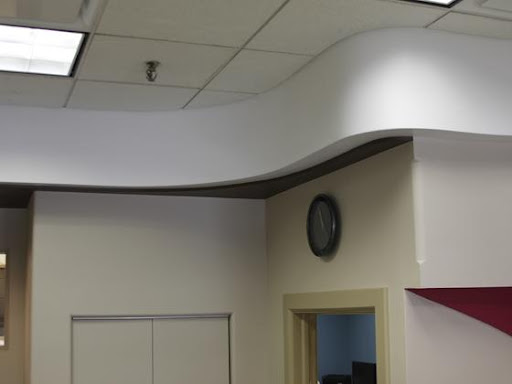
But their impact doesn’t stop at support. Wall angles play a significant role in shaping the room’s visual flow. When installed properly, they contribute to a seamless appearance that enhances the sense of order and symmetry. This clean line between wall and ceiling makes the room feel intentionally finished, rather than makeshift or incomplete. Whether the angle is left exposed as part of a utilitarian design or finished to match the surrounding surfaces, it quietly influences how polished and cohesive the space feels.
The ambient effect of drop ceiling wall angles becomes even more noticeable when combined with lighting and acoustics. A well-fitted perimeter helps reinforce sound containment by ensuring tiles fit snugly and don’t rattle or leak noise. And when integrated with recessed lighting or cove illumination, the border can guide the eye and enhance the glow around the edges, creating a more welcoming or modern vibe depending on the aesthetic choices.
In commercial buildings, offices, retail spaces, and even updated basements, drop ceiling wall angles contribute to more than just stability. They set the tone—literally and visually—for how a room functions and how it’s perceived. Even though they might blend into the background, their role is foundational to both the performance and polish of a suspended ceiling. For projects aiming to balance practicality with subtle elegance, it’s the quiet details like wall angles that often make the difference.